Plagiarism Detection and AI Analysis for Modern Content Creation
Originality has become one of the most important factors in academic, professional, and digital communication. Whether you are submitting a university assignment, publishing a blog article, preparing a business report, creating website content, or conducting research, the authenticity of your work directly affects its credibility. As content creation continues to evolve through automation, collaboration, and artificial intelligence, verifying originality has become more complex than ever before.
Plagmatic helps individuals and organizations confidently evaluate content before publication, submission, or distribution. By combining advanced plagiarism detection with AI content analysis, our platform provides a complete view of document authenticity. Instead of relying on assumptions, users receive detailed insights into content originality, source relationships, and potential AI involvement.
Modern plagiarism is not limited to direct copying. Content can be paraphrased, translated, restructured, merged from multiple sources, or refined using AI-powered writing tools. Traditional detection methods often struggle to identify these sophisticated forms of content reuse. Plagmatic addresses this challenge through advanced analysis technologies that evaluate not only matching text but also contextual relationships, language patterns, and document structure.
A Smarter Approach to Content Verification
Many originality tools focus solely on similarity percentages. While percentages can be useful, they rarely provide the complete picture. A document may contain a low similarity score while still relying heavily on existing material, or it may show a higher score due to properly cited references. Effective originality verification requires context, transparency, and detailed reporting.
Plagmatic was designed to provide meaningful information rather than simple numbers. Our reports help users understand where similarities occur, how they relate to source materials, and which sections may require additional attention. This approach supports better decision-making and helps users improve content quality before it reaches its intended audience.
- Advanced plagiarism detection technology.
- AI-generated content identification.
- Comprehensive originality reports.
- Support for multiple document formats.
- Fast and reliable analysis.
- Privacy-focused document processing.
By bringing these capabilities together in a single platform, Plagmatic helps users save time while maintaining confidence in the originality of their work.
Advanced Technology Designed to Detect More Than Direct Copying
The way content is created today requires a more sophisticated approach to plagiarism detection. Writers often modify source material through paraphrasing, synonym replacement, sentence restructuring, or translation. While these techniques may change the appearance of a text, they do not necessarily create originality.
Plagmatic uses advanced analytical methods to identify similarities that extend beyond exact word matches. Our technology evaluates language patterns, semantic relationships, contextual meaning, and document structure. This allows the system to recognize connections between texts even when wording has been significantly altered.
Source coverage also plays a critical role in detection quality. A plagiarism checker is only as effective as the information it can compare against. Plagmatic analyzes content against extensive collections of online resources, publications, archives, educational materials, and other reference sources. This broad coverage increases the likelihood of identifying similarities that less comprehensive tools may overlook.
Identifying Hidden Similarities
Some forms of plagiarism are intentionally concealed through formatting tricks, character substitutions, or structural modifications. Modern originality verification requires the ability to identify these techniques without relying solely on visual comparisons.
Plagmatic examines documents at multiple levels, helping reveal patterns that may indicate hidden similarities. By analyzing content structure and language relationships, the platform provides a more accurate assessment of originality.
This capability is particularly valuable for educators, publishers, editors, and organizations that depend on trustworthy content evaluation processes.
AI Content Detection for a New Generation of Writing
Artificial intelligence has transformed how content is created. AI writing tools can assist with brainstorming, drafting, editing, summarizing, and rewriting documents across virtually every industry. While these technologies offer significant productivity benefits, they also create new challenges related to transparency and authorship.
Many organizations now need greater visibility into how content was produced. Educational institutions may want to evaluate student submissions. Publishers may need to review contributed articles. Businesses may seek to understand how marketing materials or reports were created. AI detection provides an additional layer of insight that supports these objectives.
Plagmatic includes advanced AI content analysis capabilities designed to identify patterns commonly associated with machine-generated writing. Rather than focusing on copied text, AI detection evaluates linguistic signals, structural consistency, predictability patterns, and other indicators that may suggest artificial intelligence involvement.
Understanding Human and AI Collaboration
Content creation is no longer limited to a simple distinction between human-written and AI-generated text. In many cases, documents are produced through collaboration between writers and AI systems. A writer may create an initial draft and use AI for editing, expansion, or refinement. Alternatively, AI-generated content may be heavily revised by a human editor.
Plagmatic helps users better understand these relationships by providing AI-related insights alongside plagiarism analysis. This broader perspective supports more informed content evaluation and reflects the realities of modern writing workflows.
- Detect potential AI-generated passages.
- Analyze patterns associated with automated writing.
- Support academic and professional review processes.
- Increase transparency during content evaluation.
- Provide additional context alongside originality reports.
As AI technology continues to evolve, content verification tools must evolve as well. Plagmatic is continuously updated to keep pace with emerging content creation methods and industry requirements.
Understanding Originality Reports and Turning Insights Into Better Content
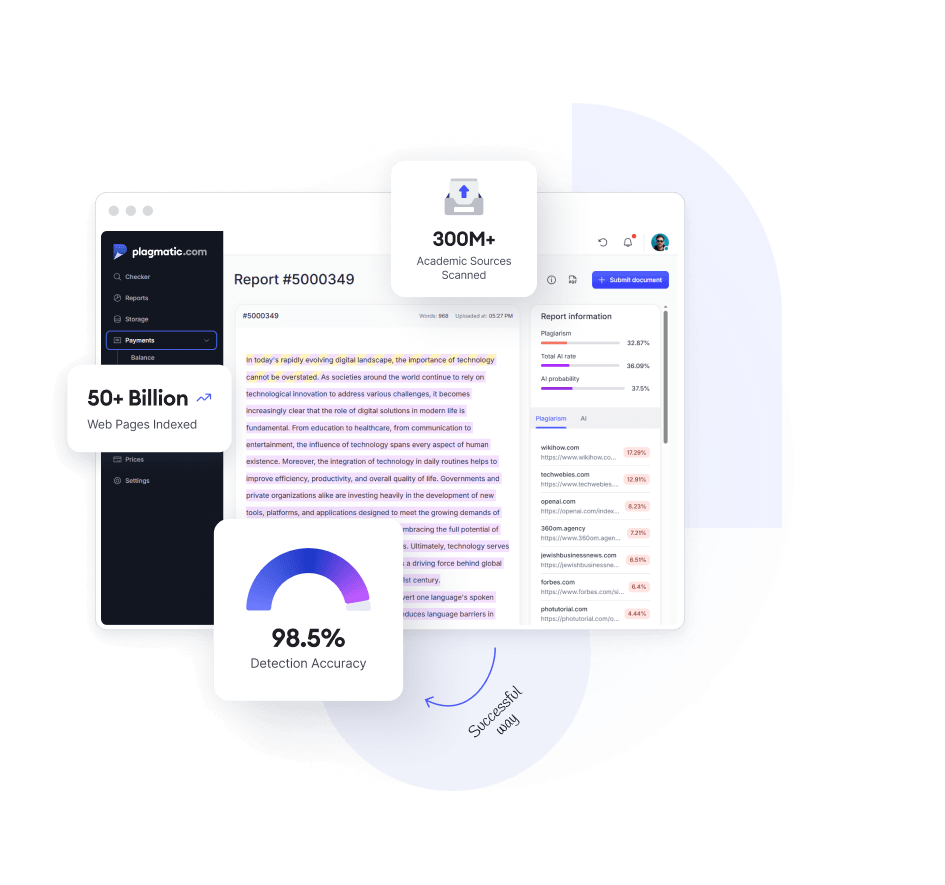
Running a plagiarism check is only the beginning of the originality verification process. The real value comes from understanding the results and using them to improve content quality. A detailed report helps users identify potential concerns, evaluate source relationships, and make informed decisions before publishing or submitting a document.
Plagmatic provides comprehensive reports designed to transform complex analysis into practical insights. Instead of presenting isolated statistics, the platform highlights the information users need to evaluate content effectively. Every report is structured to provide transparency, helping users understand not only what was detected but also why it matters.
For students, this information can help strengthen academic integrity and improve citation practices. For businesses, it can support quality control procedures and protect brand credibility. For content creators, it provides an opportunity to refine articles, reports, and digital content before publication.
What a Detailed Report Can Reveal
Every document contains unique characteristics. Some may include properly referenced materials, while others contain passages that closely resemble external sources. A high-quality originality report helps distinguish between these situations and provides context that supports better decision-making.
Plagmatic analyzes multiple aspects of content authenticity and presents findings in a clear and accessible format. Users can review detected similarities, examine source references, evaluate originality indicators, and identify sections that may benefit from revision.
This level of transparency helps remove uncertainty from the review process. Rather than guessing whether a document meets originality requirements, users gain access to data that supports confident decisions.
Originality reports are particularly valuable when working under deadlines. Fast access to actionable information allows users to make improvements efficiently without sacrificing quality or accuracy.
Who Benefits From Professional Content Verification
Originality verification is often associated with academic writing, but modern plagiarism detection and AI analysis tools serve a much broader audience. Today, nearly every industry depends on content that is accurate, trustworthy, and authentic.
Plagmatic was designed to support a wide range of users, each with unique requirements and objectives. While the specific use cases may differ, the underlying goal remains the same: ensuring confidence in content before it reaches its audience.
Students and Academic Institutions
Students use originality verification tools to review essays, research papers, dissertations, coursework, and other academic assignments. By identifying similarities before submission, they can improve citations, strengthen writing quality, and reduce the risk of unintentional plagiarism.
Educational institutions benefit from consistent evaluation processes that support academic integrity and encourage responsible research practices across multiple disciplines.
Businesses and Organizations
Businesses increasingly rely on content to communicate with customers, partners, and stakeholders. Reports, presentations, white papers, website content, and internal documentation all contribute to organizational credibility.
Verifying originality helps ensure that published materials reflect company standards and reduce potential risks associated with duplicate or improperly sourced content.
Content Creators and Publishers
Writers, journalists, editors, agencies, and publishers often manage large volumes of content across multiple projects. Maintaining originality while working efficiently can be challenging, particularly when deadlines are tight and information comes from numerous sources.
Plagmatic provides an additional layer of quality assurance that helps content professionals protect their reputation and deliver work that meets professional standards.
- Academic papers and student assignments.
- Research publications and scholarly articles.
- Business reports and professional documentation.
- Website content and digital marketing materials.
- Editorial and publishing workflows.
- Freelance and agency content production.
This flexibility makes Plagmatic a valuable solution for virtually anyone who creates, reviews, publishes, or evaluates written content.
Privacy and Security Are Essential to Content Verification
Many documents contain information that should remain confidential. Research findings, business strategies, legal materials, unpublished manuscripts, client communications, and academic work often include sensitive content that requires careful handling.
For this reason, privacy is not simply an additional feature—it is a fundamental requirement of any trustworthy verification platform.
Plagmatic is designed with security and confidentiality in mind. Users should be able to analyze documents without worrying about unnecessary exposure of their work. A secure verification environment helps build trust and encourages responsible use of originality checking technologies.
Protecting Valuable Intellectual Work
Every document represents time, effort, expertise, and intellectual contribution. Whether it is a research paper that took months to complete or a business proposal developed by an entire team, content often represents significant value.
Protecting that value requires more than accurate detection technology. It also requires responsible handling of information throughout the analysis process.
By prioritizing secure document processing and privacy-conscious practices, Plagmatic helps users focus on content quality rather than concerns about data exposure.
This commitment is particularly important for organizations and professionals who regularly work with confidential or proprietary materials.
Why Originality Creates Long-Term Value
Originality is frequently viewed as a requirement, but it also creates measurable value. Authentic content builds trust, improves credibility, supports stronger communication, and contributes to long-term success across academic, professional, and commercial environments.
Readers are more likely to trust content that demonstrates independent thinking and responsible sourcing. Organizations benefit from stronger reputations when their materials consistently meet originality standards. Researchers gain credibility when their findings contribute genuinely new perspectives. Students develop stronger skills when they learn to communicate ideas in their own words.
In each of these situations, originality becomes more than a compliance issue. It becomes a competitive advantage.
The Future of Content Verification
As content creation technologies continue to advance, verification processes will become increasingly important. Artificial intelligence, multilingual publishing, collaborative writing, and global information sharing are changing how content is produced and distributed.
The future belongs to organizations and individuals who can demonstrate transparency, authenticity, and accountability in their work. Reliable plagiarism detection and AI analysis tools will play a central role in supporting these goals.
Plagmatic is built to help users navigate this evolving landscape with confidence. Through advanced detection technology, comprehensive reporting, AI content analysis, and privacy-focused practices, the platform provides the tools needed to evaluate content in a rapidly changing digital environment.
Verify Your Content With Confidence
Whether you are reviewing an academic paper, publishing an article, preparing a business document, or managing large-scale content operations, originality should never be left to chance.
Plagmatic combines plagiarism detection, AI content analysis, source transparency, and comprehensive reporting into a single platform designed for modern content verification. By providing clear insights and reliable results, the platform helps users make informed decisions before content is submitted, published, or distributed.
Start using Plagmatic today and discover a smarter way to verify originality, evaluate AI-generated content, and maintain confidence in every document you create.



 In-depth plagiarism reporting with clear insights
 Advanced artificial intelligence detection technology
 Broad and continuously updated database coverage